

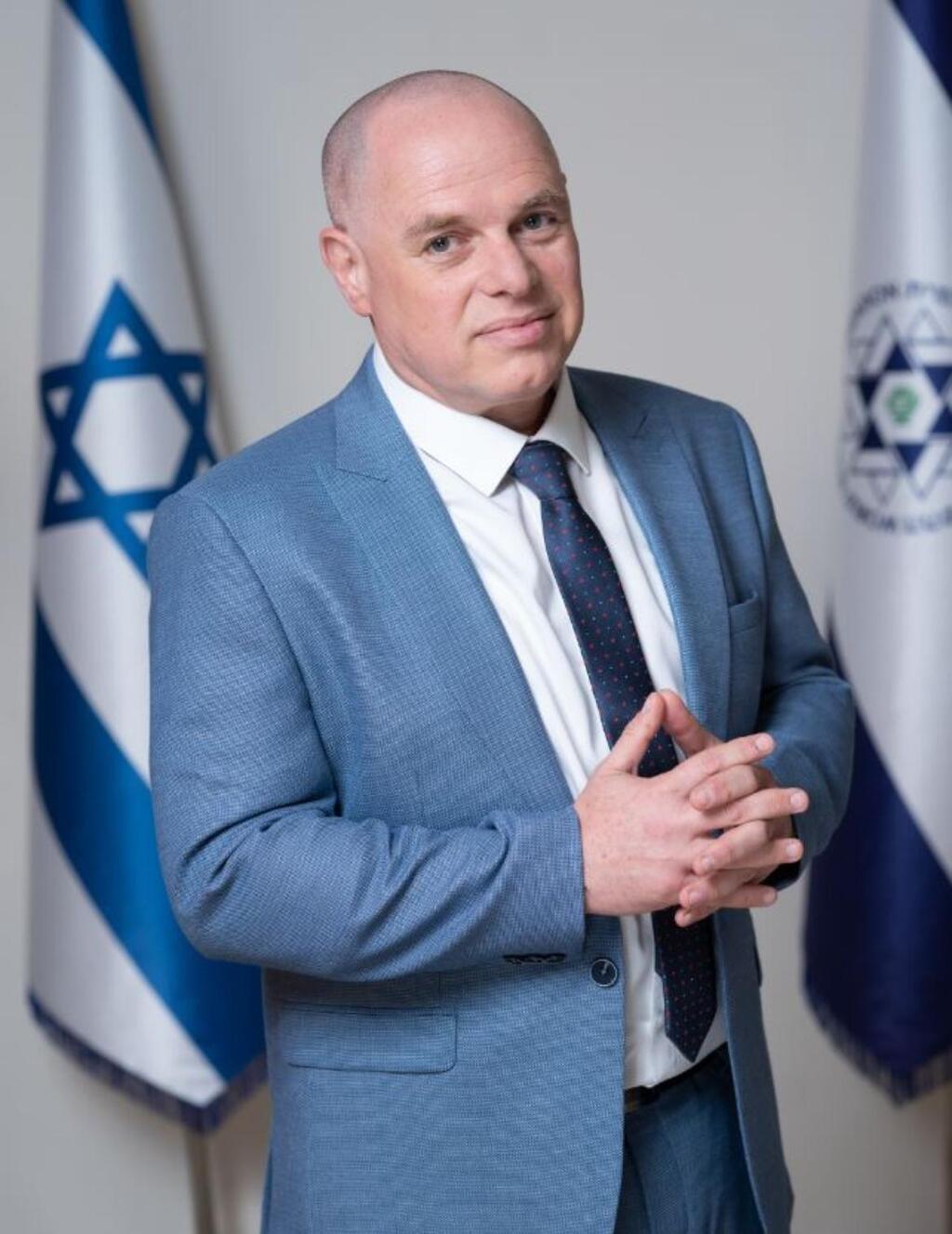
People understand that “when it comes to fighting our enemies, we need to be united. When it comes to the nature of the State of Israel, to the soul of the State of Israel, we need to be clear about our values,” said Yizhar Hess, vice chair of the World Zionist Organization.
“This is not something that you can camouflage,” he continued. “This is something that you fight for, because this is what politics is all about … a dispute over assets, over values.”
In a conversation on the ILTV Podcast following last month’s World Zionist Congress in Jerusalem, Hess described the gathering as messy, loud, and ultimately encouraging for liberal Zionists in Israel and around the world.
“The Congress, the World Zionist Congress, it's the Parliament of the Jewish people,” he explained. “Herzl left us with a gift. It's the World Zionist Congress, and he, from the second Congress on, insisted that that body would be a political one that would be organized in a democratic fashion.”
Watch previous ILTV Podcasts:
Nearly 300,000 Jews worldwide voted in elections for the 2025 Congress, underscoring the continued relevance of Herzl’s “Parliament of the Jewish people” more than a century after it was conceived.
Despite the perception of “chaos,” Hess said the liberal camp emerged with significant gains. Key leadership roles in the World Zionist Organization and Keren Kayemeth LeIsrael–JNF are now split evenly between liberal and Orthodox-right blocs. Itamar Ben-Gvir’s party was kept out of the WZO executive, and an attempt to insert Yair Netanyahu into a senior role collapsed.
“We insisted, the liberal parts, the liberal side of the Congress, insisted that there is a red line,” Hess said. “I'm happy to say that the Jewish people decided what are the limits of the Zionist discourse.”
One flagship resolution, he noted, calls the Government of Israel to legislate a law that would require everyone, including the ultra-Orthodox, to serve in the army. Another requires every member of the WZO board of governors to sign and declare that they are committed to the Declaration of Independence of the State of Israel, including a commitment to gender equality.
At the same time, the Congress passed a resolution to demand the Government of Israel establish a state commission to investigate the events of October 7 — a resolution that, according to Hess, was adopted by “a huge majority.”
Hess believes October 7 and the judicial overhaul battle together pushed many Jews off the sidelines and into Zionist politics. On a pre-Congress tour of North American communities, he said, “I was surprised to see how curious people were about what Zionism could mean today, and how relieved they were that there is a way to speak about liberal Zionism in a way that would make them proud.”
The task now, he stressed, is to translate the Congress results into real-world impact — in Israel’s public life and across a Jewish world still reimagining its relationship with the Jewish state.
Watch the full podcast:
Podcast 22.11.2025
(Credit: ILTV)

